Women’s Wellness Discussion with Izzy Fischer, Founder of DailyBasis

At The Yard Strength Training, , we focus on the foundations of strength—proper squat mechanics, core bracing, and consistent programming. But for female athletes, there’s another critical foundation that is often overlooked: women’s hormonal health and the menstrual cycle

We believe peak performance comes from understanding the body you’re training. That’s why we’re partnering with Izzy Fischer, founder of DailyBasis, to explore the connection between women’s health, hormonal balance, and athletic performance—bridging the gap between high-performance strength training and female physiology.

Whether you’re managing training with your menstrual cycle, navigating birth control and performance, or looking to better understand your hormonal rhythm for fitness optimization, this conversation is designed to give you actionable insight to support your body.

Ahead of our April 19th Women’s Strength & Social at Mill Valley, we’ll dive into how cycle syncing, targeted nutrition, and intentional strength training for women can help turn your menstrual cycle into a performance advantage—both in and out of the gym.

In This Article: Key Takeaways

1. Women’s health requires female-specific nutrition—not generic supplements
Most traditional supplements are designed for a male-default model and fail to account for women’s changing hormonal and nutritional needs across the menstrual cycle. Supporting female physiology requires targeted nutrition that adapts across phases, not one-size-fits-all formulas.

2. Understanding the menstrual cycle improves strength, recovery, and performance
Learning how hormones affect energy, strength, and recovery allows female athletes to train smarter—not harder. Aligning training with the menstrual cycle leads to better adaptation, reduced burnout, and more consistent strength gains over time.

3. Cycle syncing is about optimizing training, not doing less
Cycle syncing helps women match training intensity to hormonal phases—pushing harder when the body is primed for performance and prioritizing recovery when needed. This approach supports sustainable fitness, injury prevention, and long-term progress.

4. Different phases require different training and nutrition strategies

  • Follicular phase (days ~1–14): Best for heavy lifting, PRs, and high-intensity training when estrogen is rising
  • Luteal phase (days ~15–28): Better suited for moderate intensity, technique work, mobility, and recovery
  • Key nutrients like iron, magnesium, B vitamins, vitamin D, and zinc support performance and recovery across the cycle.

5. Women’s hormonal health should be treated as performance data, not limitation
Your menstrual cycle provides real-time feedback on energy, recovery, and readiness. When women learn to interpret this “internal data,” they can optimize training, nutrition, and hormonal health, leading to better performance and a healthier long-term relationship with fitness.

Q&A with Izzy

1. DailyBasis is built around bridging a real gap in women’s health. What was missing in the wellness space that led you to create this?

Most supplements weren’t designed for female biology. They were built for a general population, which, historically, has meant male-default. What we kept seeing was that women were doing everything right: eating well, training hard, taking their vitamins. And still feeling off. Depleted. Like their body wasn’t keeping up.

When we dug into the research, the answer wasn’t complicated: women have changing nutritional needs across the menstrual cycle, and there was nothing on the market designed to actually meet them. Everything was either a generic multivitamin or a symptom-specific quick fix. We wanted to build the foundation: something that works at the root, not just the surface.

2. At The Yard, strength is our foundation. How does understanding the hormonal cycle actually make someone a stronger athlete?

It makes you a smarter one, which over time makes you a stronger one. When you understand how your hormonal environment shifts across the month, you stop fighting your body and start working with it. You’re not “off” during certain phases, your body has different priorities, different energy availability, different recovery needs. Training that accounts for that leads to better adaptation, less burnout, and more consistent progress. Awareness is the first step, but it’s what you do with that awareness that changes your performance.

3. A lot of women feel pressure to train at 100% every single day. How does cycle syncing help athletes optimize without burning out?

The all-or-nothing approach tends to catch up with people. The body isn’t a machine that performs identically every day and for women, that’s especially true. Cycle syncing isn’t about doing less. It’s about doing the right things at the right times. When you align your training intensity with your hormonal phases, you’re actually able to push harder during the phases your body is primed for it, and recover smarter in the phases it needs that. The result is more consistent progress and a more sustainable relationship with training.

4. Which phase is best for heavy lifting — the squats, the bench, the big lifts — and how should women fuel those days?

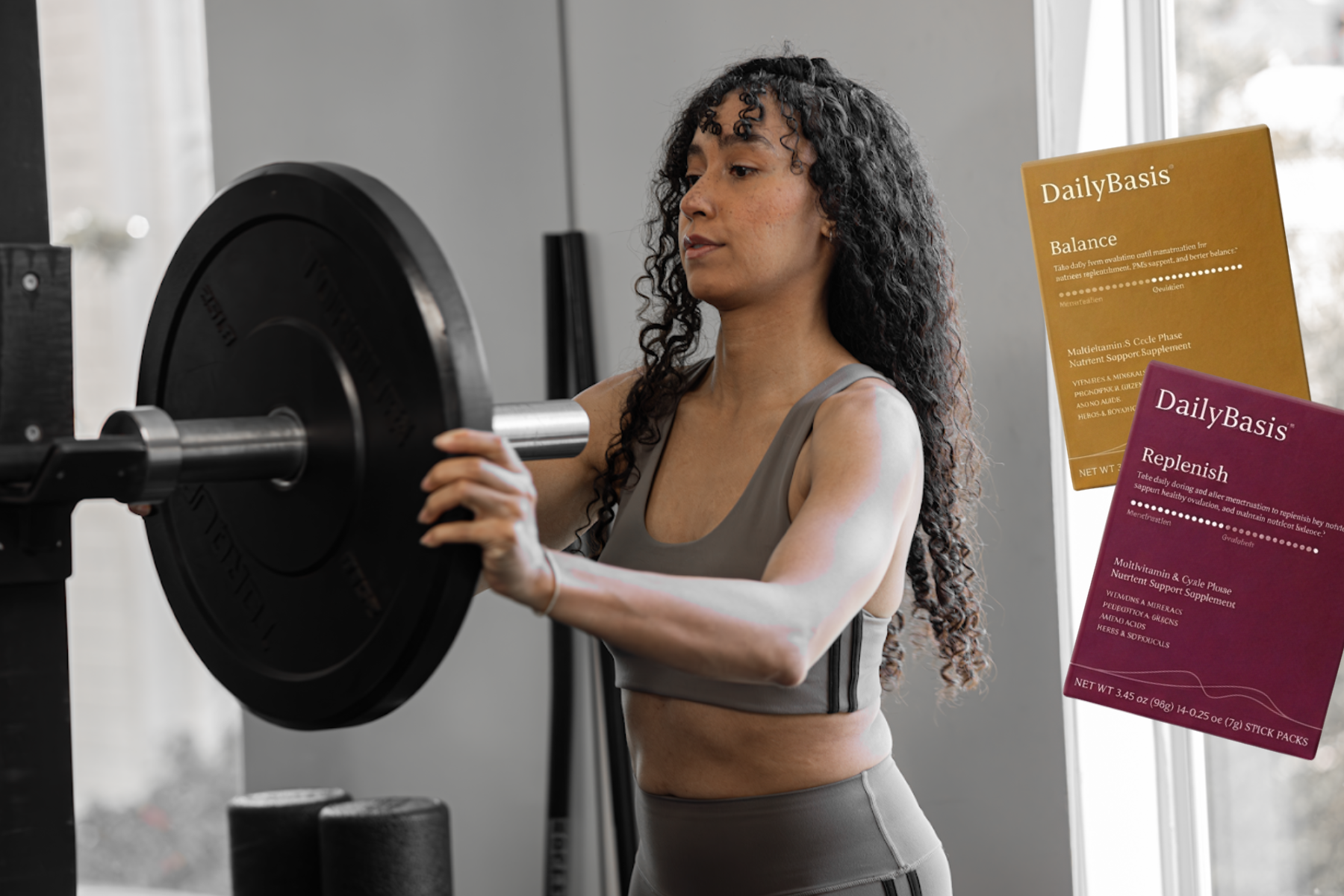
The follicular phase: roughly days 1 through 14, leading up to ovulation is when most women feel their strongest. Estrogen is rising, energy is high, and the body is primed for performance. This is the window to push your PRs. Fueling for this phase means prioritizing protein for muscle synthesis, iron to support the replenishment period after menstruation, and B vitamins for sustained energy. The Replenish formula in our Cycle Routine was designed specifically around this phase: rebuilding what the body loses during menstruation and supporting the high-output weeks that follow.

5. For the luteal phase, when energy dips and motivation is harder to find — how should training adjust to still see progress?

The luteal phase (roughly days 15 through 28) gets a bad reputation, but it’s not a phase to write off. It’s a phase to train differently. Your body is doing real work: it’s managing inflammation, shifting progesterone levels, and preparing for the next cycle. Strength training can absolutely continue, but you might find moderate intensity and more recovery time serves you better than chasing PRs. Mobility work, technique-focused sessions, and accessory movements are all productive here. And on the nutrition side, this is when magnesium, B6, and anti-inflammatory botanicals do meaningful work, which is exactly what our Balance formula is built around.

6. For a woman training 3–4 times a week, what are the non-negotiable nutrients to support her through the cycle?

Iron is foundational: particularly in the first half of the cycle, when menstruation creates real depletion. B vitamins for energy metabolism. Magnesium for muscle recovery and mood stability. Vitamin D3 for immune function and bone health. Folate. Zinc. And a healthy gut microbiome, because digestion and hormone metabolism are more connected than most people realize.

The challenge isn’t just knowing what to take, it’s finding them in doses and forms that your body can actually absorb. That’s where a lot of supplements fall short. The Cycle Routine was formulated to address that specifically: meaningful doses, bioavailable forms, designed with OB/GYNs and registered dietitians.

7. You’re sampling Your Cycle Routine product at the event. How does cycle-aligned, plant-based nutrition support things like birth control transitions or working to re-establish a natural rhythm?

When someone comes off hormonal birth control or is working to support a more regular cycle, the foundation matters more than ever. The body often needs time to recalibrate, and nutritional gaps can make that harder: irregular cycles, energy fluctuations, mood shifts. What we’ve designed supports the body’s foundational needs during that process: replenishing key nutrients, supporting gut health, and giving your body the building blocks it needs to find its rhythm. It’s not a quick fix,  nothing meaningful is. But a strong nutritional foundation makes the process easier, and more consistent.

8. Electrolytes come up constantly in fitness. How does DailyBasis think about hydration in the context of hormonal health?

Hydration needs actually shift across the cycle. During the luteal phase, progesterone affects fluid retention and electrolyte balance in ways that a standard electrolyte drink wasn’t designed for. The Cycle Routine includes minerals that support hydration and fluid balance as part of the broader formula — it’s not positioned as a standalone electrolyte product, but it’s built with the understanding that hydration isn’t one-size-fits-all either.

9. What’s the one thing you hope women leave with after the event on the 19th?

That their cycle is data, not a liability. Every phase is telling you something about what your body needs. Once you start reading it that way, the whole relationship with training, nutrition, and energy shifts. You stop managing symptoms and start working with a system that’s actually on your side.

10. Why does it matter that women have spaces to talk openly about things like birth control and cycle health?

Because silence creates gaps: in research, in product development, and in how women understand their own bodies. For a long time, women were told that their cycle was too complex, too variable, too inconvenient to factor in. The conversations happening at events like this one are part of changing that. When women can talk openly about what they’re experiencing, they’re better equipped to advocate for themselves — with their doctors, their coaches, and their own health decisions. That’s the whole point.

Closing

Women’s hormonal health isn’t a constraint—it’s a framework for better training. When athletes learn to align strength work, recovery, and nutrition with their menstrual cycle, they unlock a more sustainable and effective path to performance. The goal isn’t to push through every phase the same way, but to train with intention, using the body’s natural rhythms as a guide for long-term strength, resilience, and progress.

The Yard Strength Training was established in 2021. It is a reservation-based strength training gym with locations in San Francisco and Mill Valley that offers pod-based training, group classes, and space for independent personal trainers. Each of our workout pods includes your own rack, bench, barbell, and plates—plus access to nearby fan bikes, rowers, and a shared training space equipped with kettlebells, dumbbells, and functional training tools. Interested in joining the squad as an Independent Personal Trainer, Client, or Member? Contact us here.


DailyBasis is a women’s health and nutrition company designed to support the body through every phase of the menstrual cycle. Built on the understanding that women’s nutritional needs shift hormonally, DailyBasis creates cycle-aligned formulas that help fill key nutrient gaps, support energy, recovery, and hormonal balance. The goal is simple: move beyond one-size-fits-all supplements and give women a smarter, more personalized foundation for training, health, and everyday performance.

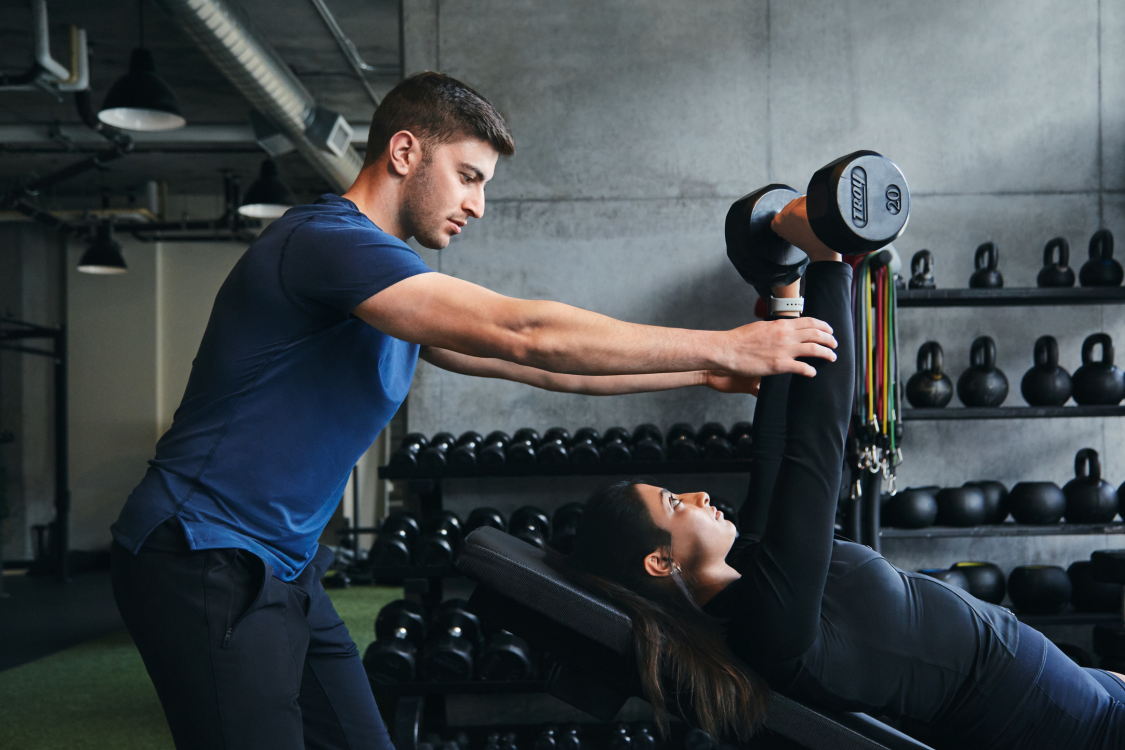
Meet The Yard Trainer, Austenne: Merging the Worlds of Dance & Strength Training

This March at The Yard Strength Training, we’re stepping into The Backyard with Austenne, a trainer who seamlessly blends the discipline of heavy lifting with the fluidity of dance.

From the high-pressure talent agencies of Beverly Hills to the lifting pods of Mill Valley, Austenne’s journey is about more than just getting toned—it’s about claiming space and building a stronger version of yourself.

In This Article: Key Takeaways

  1. From Cardio to Strength Training in Mill Valley & SF: How Austenne moved from elliptical and StairMaster workouts to free-weight strength training, building lean muscle, improving posture, and boosting confidence.
  2. Dance Meets Strength Training: Why dancers and fitness enthusiasts alike use heavy lifting to enhance core stability, improve balance, and elevate performance in movement-based activities.
  3. The “Austenne Signature” Approach to Personal Training: Combining mind-muscle connection, easy-to-understand metaphors, and recovery-focused techniques for safe, effective strength gains.
  4. Conquering Day One Fear for Beginners: Expert advice for anyone starting free-weight training or dance fitness, helping beginners build confidence, track progress, and avoid injury.
  5. Simple Protein-Packed Breakfast Hack: How adding extra protein to your morning meal fuels muscle growth, improves recovery, and powers your strength training sessions in San Francisco and Mill Valley.

Want to train with Austenne or Trainer like her? Check out our Trainer Profiles!

1. Every trainer has a “Day 1.” What was the spark that originally got you into strength training, and how has that evolved into your career today? 

I used to be a “front of the gym” girl — living on the elliptical and StairMaster, convinced that burning more calories was the answer to getting toned. Then a friend came back from summer vacation looking strong, sculpted, and completely transformed. She took me to the “scary” part of the gym — the free weights — and everything changed. When I started strength training 3–4 times a week, my body didn’t just get smaller, it changed shape. I built muscle, developed that defined, “toned” look I had always wanted, and for the first time, I truly loved what I saw in the mirror. At the time, I was working at a talent agency in Beverly Hills, waking up at 5 a.m. to lift before my 8 a.m. start. On the mornings I lifted, I walked into work feeling grounded, energized, and more confident pitching in high-pressure rooms. I’d walk into the office, legs activated from squats and lunges, posture upright from rows and presses. My mood was better. My energy was higher. When I stopped focusing on burning calories and started focusing on building muscle, everything shifted. I wasn’t trying to shrink anymore — I was building strength, confidence, and a completely new version of myself. Now, it’s my passion to get women out of the front of the gym — and into the back, the free weights, where real progress is made.

2. You bring a very specific “Backyard Focus” to The Yard: Dance. How do the worlds of dance and heavy lifting intersect in your own training? 

I need to lift in order to become a better dancer. One of my favorite sultry floorwork moves requires lifting myself off the ground using only my core. That doesn’t happen by accident — it happens because I train for it. Since I dance in heels, I need strong calves to feel sturdy and grounded. Lifting heavy gives me the strength to hold myself with confidence and good posture. Deadbugs, or “Gravitrons” (more on that later) teach me how to engage my core instead of dumping into my lower back — which matters a lot when you’re moving in heels. There’s also a specific thrill that comes with being bad at something… and then watching yourself get better.

Quick story; In 7th grade, I auditioned for a play. They asked us to do across-the-floor pirouettes. I was mortified. I couldn’t spin. What came out looked less like a dancer and more like an ape attempting to walk in a circle. Now? After years of building a strong core and getting stronger overall, I can do a pirouette. And I can do it in stilettos. You don’t have to be a dancer to benefit from strong calves. Strong calves help you walk in heels with confidence and grace when you’re out with your girlfriends.

3. Many people see dance and strength training as opposites—one being fluid and the other being rigid. Why is lifting actually a dancer’s best performance tool? 

Dance demands strength. You have to engage and squeeze your inner thighs to stay stable and controlled. You need a strong core to lift yourself off the ground, to hold yourself in balance, to move with intention. A clean pirouette doesn’t just happen because you’re “graceful” — it happens because your core is strong enough to keep you centered. Your legs have to be powerful so your movement can look effortless. The stronger your foundation, the freer your expression. The best way to build that strength is through a weight lifting program. Strength training doesn’t make a dancer stiff — it gives her control, endurance, and the ability to perform with confidence. Even if you never step into a dance studio, strength training changes the way you carry yourself. You move with more control, more confidence — like you’ve got your own soundtrack playing, even at the gas station.

4. What is the “Austenne Signature”? What is that one thing your clients know they’re going to get when they step into a pod with you? 

Stretching and foam rolling! As my clients build muscle, I want them to feel open, fluid, and able to move with ease in their everyday lives.

5. We talk a lot about intentionality at The Yard. How does your background in dance help you teach clients about mind-muscle connection and body awareness?

Dancers tend to make up their own language. What one person would call a leg kick, I might call a “KA KA “- simply because the word just makes more sense for the movement. I use this same technique with my strength training clients. For example, most people call it a dead bug, I may call it a “Gravitron”- like the spinning ride at  the carnival that sucks you back onto the wall. You want to do the same thing with your lower back. Use your core to suck your lower back flat to the ground. I try to choose metaphors or words that relate to a real world example.For example: instead of saying “hinge your hips back”, I might say “imagine you are pushing something out of the way using only your butt.” Boom. Using real language works!

Rapid Fire Round!

Current song on repeat in your headphones while training?

“Last Call” by Bryson Tiller.

Go-to recovery ritual after a long day of dancing and training?

Stretch + foam roll, followed by the steam room.

Favorite place in SF/Mill Valley to find creative inspiration?

A brief hike up HORSE HILL in Mill Valley. At the top of the hill you can sit on the bright green grass and watch the horses / sprawling view of Mill Valley/SF.

One piece of advice for a dancer who is scared to start lifting? Or someone who lifts who would like to get into dance?

My advice is- Let yourself suck! What kept me out of taking dance class was thinking I’d be the worst one. And honestly, maybe I was. But your Day 1 — your first dance class — that’s your before. You don’t get an “after” without one. The best part is watching how much progress you’ve made. When you shift your mindset to, “How much progress can I make?”, you start to notice your improvement; Starting with five pounds in an overhead press… and now pressing 30 pounds in each hand. Barely picking up choreography at first… to effortlessly performing in sync. If you’re scared to start lifting or dancing, my advice is to feel the fear and do it anyway. Or, do it scared.

Any nutrition advice for women?

Egg whites in oatmeal!! I recently discovered this super quick trick to add 20 grams of protein to my breakfast. I buy Trader Joe’s carton of egg whites, pour it into my oatmeal, throw it inn the microwave for a minute, and boom; protein packed, fluffy oatmeal.

Closing
Austenne’s story is a reminder that strength training is for everyone—whether you’re looking to build muscle, improve posture, or gain the confidence to try something new. By combining discipline, creativity, and a playful approach to movement, she embodies the philosophy of The Yard: get stronger, move better, and embrace the process. No matter your starting point, the journey to your best self begins with that first step—and maybe a lift or two.

The Yard Strength Training was established in 2021. It is a reservation-based strength training gym with locations in San Francisco and Mill Valley that offers pod-based training, group classes, and space for independent personal trainers. Each of our workout pods includes your own rack, bench, barbell, and plates—plus access to nearby fan bikes, rowers, and a shared training space equipped with kettlebells, dumbbells, and functional training tools. Interested in joining the squad as an Independent Personal Trainer, Client, or Member? Contact us here.

Austene Caproni is a Certified Personal Trainer at The Yard’s Mill Valley location. She specializes in evidence-based resistance training for women who want muscle tone, long-term mobility, and pain free aging. You can contact her at austennec@gmail.com.

Meet The Yard Trainer, Darioush: The Hybrid Athlete Redefining Performance

At The Yard Strength Training, we believe strength training isn’t just about how much you can load up on a barbell; it’s about how that power translates to every part of your life — from everyday performance to outdoor hobbies, to marathon and half marathon training. No one embodies this hybrid training philosophy quite like Darioush Ebadat, one of The Yard’s longest-tenured trainers and co-founder of Progression Run Club.

Darioush has spent years proving that lifting heavy and building endurance aren’t opposing goals — they’re the foundation of modern hybrid athletic performance. By combining strength training, endurance training, and smart run programming, he helps athletes become stronger, faster, and more resilient. Whether he’s coaching a heavy lifting session in a pod or leading runners through the rolling terrain of Mill Valley, his mission is simple: helping people build strength, improve running performance, and feel capable in their bodies again.

With our February Run Challenge in full swing, we sat down with Darioush to talk about the intersection of strength training and marathon preparation, his non-negotiable recovery habits, and why the intentional training environment at The Yard is a game-changer for anyone preparing for a marathon, half marathon, or endurance race.

  1. You’re a co-founder of Progression Run Club and a staple at The Yard. How do these two worlds: lifting heavy and running far, intersect in your own fitness journey?

    RUNNERS ARE HYBRID ATHLETES. For me, lifting and running have always gone hand in hand. Running shows you where your weaknesses are, and strength training gives you the tools to fix them. The intersection is efficiency, being strong enough to run farther with less wear and tear on the body.
  2. What is your “why”? What keeps you showing up for those early morning runs or heavy sessions when motivation isn’t there?

    My “why” is helping people feel capable in their bodies again. I selfishly use the community as my reason to keep showing up! Motivation comes and goes, but showing up builds confidence and I know that every session I do makes me a better coach and a better example for the community.
  3. What makes the environment or the equipment at The Yard uniquely suited for someone training for a race compared to a standard commercial gym?

    The Yard is built for performance, not distractions. The space, equipment, and layout allow runners to train the way they actually move, single-leg strength, power, mobility, and stability, without fighting for space or machines. It feels intentional, which matters when you’re training for a goal.
  4. Why is strength training so important for runners?

    Strength training helps runners absorb impact, maintain good mechanics under fatigue, and stay healthy over long training cycles. Strong hips, glutes, core, and feet mean fewer compensations, and fewer injuries, especially as mileage increases.
  5. Besides lifting, what are the non-negotiable habits you recommend for runners to stay healthy all season?

    Daily mobility, quality sleep, and listening to early warning signs from the body. Foam rolling, targeted mobility work, and fueling properly aren’t optional, they’re part of training, not something you add only when something hurts.
  6. What was the inspiration behind starting the Progression Run Club at The Yard, and how has the community evolved since your first meetup?

    The goal was to create a run club that didn’t just run, but helped people run better and change the definition of what a runner is: a Hybrid Athlete. Since our first meetup, it’s grown into a community where runners of all levels feel supported, educated, and confident—both on the road and in the gym.
  7. Our February challenge at The Yard is to run as many miles that month and shave off your time. Any tips on how to focus on getting a PR for a mile?

    Consistency first, then quality. Focus on controlled speed sessions, short intervals, and strength work that supports power especially with hamstrings, glutes, plyometrics and stability. A faster mile isn’t just about pushing harder, it’s about moving more efficiently.
  8. Is there a specific “aha!” moment you’ve witnessed with a client where strength training finally clicked and transformed their running performance?

    I’ve seen it when a runner realizes they feel lighter, more stable, and less sore, sometimes without changing pace at all. That moment usually comes when strength training stops feeling like “extra work” and starts feeling like a performance tool.

Rapid-Fire Round!

  • What are you currently logging miles in?
    A mix of rotating shoes depending on the session- Altras for everyday, Brooks for speed work, and Saucony for long runs! Comfort and purpose always come first.
  • What’s your go-to meal before a big effort?
    Something simple and carb-focused. Nothing fancy, just fuel that I know works, like 2 eggs with toast and peanut butter.
  • One song that always gets you through a final set or a final mile?
    Anything with a steady beat (EDM), something that locks you in rather than distracts you.
  • Where is your favorite place to take the Run Club out on the weekends?
    So far The Yard in MILL VALLEY is great! Mill Valley gives you routes that are a mix of views and challenge, bridge runs, rolling terrain, and places that remind people why they love running in the first place.

Whether you’re training for a marathon, half marathon, or your next PR, building strength and endurance together is the fastest path to becoming a stronger, more resilient runner. If you’re ready to experience hybrid training that combines strength training, run coaching, and performance-focused recovery, join us at The Yard Strength Training or run with Progression Run Club and see how smart training can elevate your running performance. Book a session, join a class, or drop into an upcoming run and start training like a hybrid athlete today.

5 Ways Strength Training Prepares You for Snow Season

When the first snow falls in Tahoe, the countdown is over — it’s time to hit the slopes, strap into snowshoes, or glide through pine forests on cross-country skis. But before you load up the car and head for Palisades, Northstar, Heavenly, Kirkwood, Sugar Bowl, or Homewood (yay, it’s back!) there’s one thing you should be training: your strength.

At The Yard, we see snow season as another reason to get stronger — and your off-season work in the gym pays huge dividends once you’re on the mountain. Whether you’re skiing, snowboarding, snowshoeing, or tackling Tahoe’s cross-country trails, here’s how strength training helps you move better, stay injury-free, and make every run your best one yet.

1. Builds Leg and Core Power for Every Turn

Strong quads, glutes, and hamstrings are your shock absorbers for long descents and bumpy terrain. Strength training builds the power you need to carve through powder or push through a climb on snowshoes. Core stability is equally essential — every turn, pole plant, and downhill stance starts from your midsection.

Try This: Incorporate squats, lunges, and deadlifts into your weekly training. In The Yard’s pod workouts, you’ll have access to your own rack, plates, and bench — perfect for ski-ready strength work.

2. Improves Balance and Agility on Uneven Terrain

From icy patches to hidden moguls, Tahoe terrain is unpredictable. Strength training, especially single-leg work and resistance exercises, sharpens balance and coordination. This translates to smoother transitions, better edge control, and fewer wipeouts.

Try This: Add single-leg Romanian deadlifts, step-ups, and rotational movements to your training. Stability breeds control — both in the gym and on the slopes.

3. Enhances Endurance for Long Days at Altitude

A day at Heavenly or Kirkwood can easily rack up thousands of vertical feet. Strength endurance training — moderate weight, higher reps, minimal rest — conditions your muscles to perform efficiently all day long.

Try This: Circuit-style workouts, such as our small-group HYROX HIIT classes, mimic the continuous effort you’ll need for long runs and back-to-back lifts. It is called a ski erg, after all.

4. Reduces Risk of Injury

The best ski season is one that lasts all winter. Strength training helps protect your joints, improve mobility, and balance out muscle imbalances that cause overuse injuries. A solid strength foundation supports your knees, hips, and lower back — the areas most prone to ski and snowboard strain.

Try This: Train with one of The Yard’s certified personal trainers to address weak points and develop an individualized injury-prevention plan before your next trip to the mountains.

Yard personal trainer, physical therapist, and snowboarder Matt Kuik gives the following take:

“Skiing is one of the top risks for tearing your ACL. Being prepared for your time on the mountain includes training your lower extremities like your quads, hamstrings, and glutes to increase your strength, power, and endurance as well as training plyometrics and impact control.

I think it’s important for each person to understand their capacity before going up on the mountain, especially when it comes to avoiding the dreaded last run situation when skiers and boarders are more prone to injury due to fatigue.”

5. Keeps You Ready for Every Adventure in Tahoe’s Backyard

Tahoe isn’t just for skiers and snowboarders. Between snowshoe trails, cross-country routes, and backcountry climbs, you’ll need full-body strength, balance, and recovery to keep up with it all. The Yard’s strength and recovery tools — from our sauna and cold plunge to mobility-focused group classes — help you train hard and bounce back fast.

Try This: Alternate gym days with recovery sessions in our PARC Sauna & Plunge for better circulation and faster recovery between training and mountain weekends.

Ready to Get Snow-Season Strong?

No matter where you like to play in the snow, The Yard’s private pod training and personalized coaching will help you hit the slopes stronger than ever. Book a free 30-minute guided training session today and get your body ready for Tahoe’s best snow days — right here in your own backyard.

Strength Training for Seniors: Build Strength, Confidence, and Longevity at The Yard

It’s never too late to get stronger. Strength training isn’t just for athletes or the young—it’s one of the most powerful ways for seniors to stay healthy, mobile, and independent. At The Yard, we specialize in helping older adults discover the life-changing benefits of strength training through personalized pod training and one-on-one personal training sessions, all in a clean, private, and supportive environment.

Why Strength Training is Essential for Seniors

As we age, we naturally lose muscle mass, bone density, and balance—but strength training slows, and even reverses, these changes. Just a few weekly sessions can lead to:

  1. Improved Balance & Mobility: Reduce the risk of falls and maintain independence.
  2. Stronger Bones: Weight-bearing exercises help combat osteoporosis.
  3. Better Joint Health: Strength training supports the muscles around joints, easing pain from arthritis.
  4. Increased Energy & Confidence: Build the strength to keep up with daily activities and hobbies.
  5. Metabolic Health: Improve heart health, lower blood pressure, and regulate blood sugar.

Whether you’re brand new to the gym or returning after years away, The Yard provides a safe, controlled setting where you can progress at your own pace.

Pod Training: Your Private Gym Space

One of the most intimidating parts of starting a fitness routine is sharing equipment in a crowded gym. That’s why The Yard offers pod training, a completely private workout station equipped with:

  1. Your own rack, bench, and plates
  2. Easy access to rowers, bikes, and turf space
  3. All the kettlebells, dumbbells, and mobility tools you need

With pod reservations, you’ll never wait for equipment or feel rushed. It’s your own personal gym—perfect for seniors looking for comfort and consistency.

Work with a Personal Trainer

If you’re unsure where to start or want expert guidance, our certified personal trainers can design a custom program tailored to your abilities, limitations, and goals. Whether you want to:

  1. Regain strength after an injury
  2. Improve balance and stability
  3. Build endurance for travel or outdoor adventures
  4. Simply feel stronger and more confident

…our trainers will meet you where you are and guide you every step of the way.

Try a Free 30-Minute Guided Training Session

Ready to experience the difference? The best way to get started is with a free 30-minute guided training session at The Yard. You’ll learn the basics of strength training, get a feel for our pod setup, and leave with a plan to start getting stronger—safely and effectively.

Take control of your health, build strength, and feel your best at any age.

Book your free 30-minute session today and start your journey toward a stronger, more vibrant life.

Contrast Therapy: It’s Time to Take the Plunge

Let’s talk about contrast therapy. You’ve probably seen some Instagram posts, maybe read a blog or two, or you might even have a friend who swears by it. If you’ve been considering adding it to your recovery routine, then this is your sign to finally take the plunge. PARC at The Yard’s improved recovery zone now features a Plunge™ brand cold plunge to compliment our Plunge™ brand sauna. This powerful contrast therapy combination of heat and cold is designed to help you recover faster, reduce inflammation, and build both physical and mental resilience.

What is Contrast Therapy?

Contrast therapy alternates between intense heat (sauna) and cold immersion (cold plunge) to stimulate circulation, boost recovery, and sharpen the mind.

  1. Sauna: Heat helps improve blood flow, loosen muscles, and promote deep relaxation.
  2. Cold Plunge: Cold immersion reduces inflammation, decreases muscle soreness, and triggers endorphins for a natural mood boost.

When used together, the hot-cold contrast improves heart health, supports immunity, and creates a euphoric “post-session high” that keeps you coming back for more.

Why Choose The Yard for Recovery

At The Yard, recovery is more than an afterthought—it’s part of the training philosophy. Whether you’re strength training, prepping for a HYROX race, or simply looking to recharge, PARC at The Yard provides a premium space to:

  1. Boost muscle recovery after heavy lifts or intense cardio
  2. Enhance mental clarity and reduce stress
  3. Build community through shared recovery sessions

Plunge™ Brand Quality

Our sauna and cold plunge aren’t just any equipment—they’re Plunge™, the industry leader trusted by top athletes and wellness professionals. Designed for precision temperature control and premium comfort, these tools make contrast therapy accessible, safe, and highly effective for everyone, from first-timers to seasoned pros.

How to Book Your Session

Contrast Therapy at The Yard is now available to members, trainers, and guests. Book a single session, add it to your training routine, or pair it with personal training or small-group classes for the ultimate recovery experience.

Step into the heat. Take the plunge. Discover your strongest self at PARC at The Yard.